We understood that the spiral staircase leading to the Castle's rooftop terrace is the original one, and that some walls of the Temple that once was on top of the Mausoleum still survive. That Temple was circular, and not rectangular, as shown in previous reconstructions.
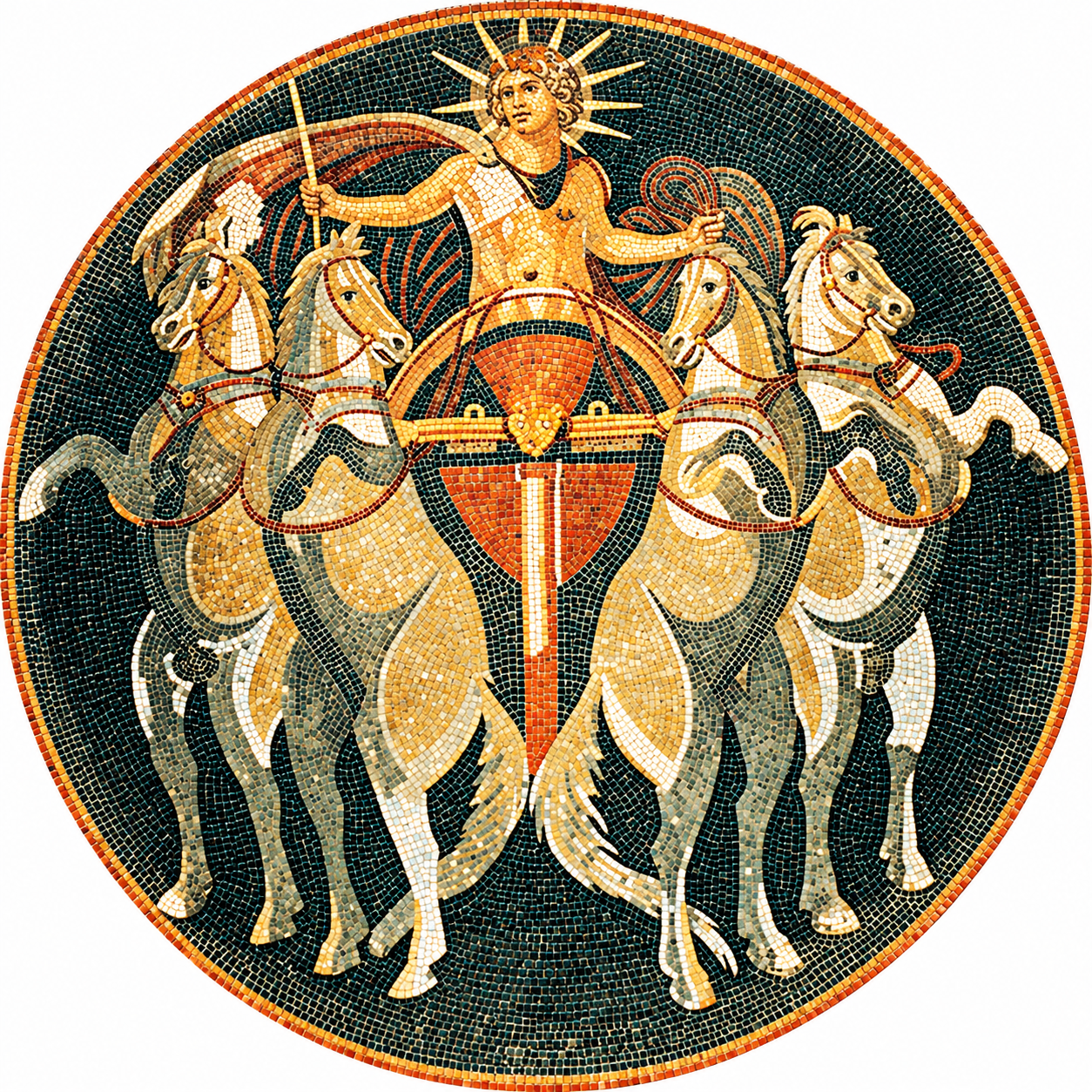
According to some ancient sources, on top of the Temple was a colossal bronze sculpture depicting the Emperor Hadrian, deified after death, as “Sol Invictus“, driving the Quadriga of the Sun (four-horse chariot).
In 590 AD, Pope Saint Gregory the Great led a penitential procession during the devastating plague that had claimed millions of lives at that time.
When the Pope reached the Aelius Bridge, the Archangel Michael appeared to him atop the Castle, wiping the blood from his sword and sheathing it – a divine sign that the plague was ending. From that moment on, the Mausoleum became known as Castel Sant'Angelo (Castle of the Holy Angel).
In the 13th century, a chapel named ”Sancti Angeli usque ad coelo” was created inside the Temple to commemorate the apparition, and in the 15th century, a statue of the Archangel was placed on top of the Castle. The current statue is of a more recent date.
The Feast of Archangel Michael is celebrated every year on September 29th; he is depicted as a warrior in armor and wielding a sword, in the act of casting out the devil. He is venerated as the leader of the heavenly hosts, protector of humanity against evil, champion of justice, and defender of the faith.
What is the connection between Emperor Hadrian and Archangel Michael, who are depicted facing one another in the frescoes of the magnificent Sala Paolina?
Emperor Hadrian, identified with Sol Invictus (the Invincible Sun) was immortal like the Sun; metaphorically, he held the reins of the Universe and, consequently, of the destiny of Rome.
Archangel Michael was the quintessential solar archangel: «exquisitely beautiful, radiant with light, haloed in victory, a protector against the snares of dark forces, a stronghold of Light, and a bulwark against Darkness».
Thus, there was a continuity between pagan and Christian religious symbols: both the Emperor and the Archangel were depicted as invincible warriors, and were linked to the Sun, to Light, and to the triumph over Death and Darkness.
You will find this and much more about the fascinating, millennia-long history of the Castle in our book «Castel Sant'Angelo. Mausoleym of Hadrian. Architecture & Light» published by Rirella Editrice and also in English edition.
It is available for purchase on the Rirella Editrice website
and in Rome in the bookshop of the National Museum of Castel Sant’Angelo.